Study
A focused study exploring composition, lighting, and atmospheric depth in digital environment work. This entry breaks down techniques for building believable natural landscapes from photographic and painted elements.
Updates on matte-painting projects, studies, and discoveries from the world of digital environment art and visual effects.
The practice of matte painting sits at the intersection of photography, digital painting, and environmental storytelling. Each study begins with an observation of how light behaves across a landscape, how shadows gather beneath a cliff face, and how atmospheric haze softens distant mountain ridges. By layering photographic elements with painted textures, artists construct worlds that feel both grounded and imagined. These environments require a deep understanding of color temperature, value range, and compositional balance. The goal is not photorealism in isolation, but a believable space that supports narrative intent. Every frame becomes an exercise in seeing more carefully, training the eye to notice the subtle gradients and edge qualities that define natural light across skies, water, and terrain.
The Frozen Cliff project represents a technical exploration into camera projection workflows, a method that transforms static imagery into dimensional environments. By projecting painted and photographed elements onto simple geometry, artists create parallax-rich scenes that respond to camera movement. This technique bridges traditional matte painting with real-time and rendered visual effects pipelines. The challenge lies in matching projection angles, maintaining edge consistency across depth layers, and ensuring that lighting remains cohesive as the camera shifts. Each iteration refines the spatial understanding of the scene, revealing how even subtle parallax can dramatically enhance the illusion of depth in a digital environment.
Environment art demands constant study of the natural world. Skies alone offer an endless curriculum in color and light, from the warm gold of a low sun cutting through dust to the deep indigo of twilight creeping across a cityscape. Urban environments present their own complexities, requiring artists to balance architectural precision with atmospheric decay, to render glass and steel while respecting the organic wear of weather and time. Whether painting a futuristic cityscape or a lost ruin, the same principles apply: establish a clear light source, define material properties through reflection and roughness, and use atmospheric perspective to separate foreground, midground, and background planes into a coherent spatial narrative.
The visual effects industry relies on artists who can move fluidly between disciplines, combining photographic reference with digital painting, 3D projection, and compositing techniques. A strong foundation in color theory and lighting fundamentals allows for consistent work across different styles and project requirements. Personal studies and ongoing training become essential tools for staying current with evolving workflows and software capabilities. The portfolio becomes a living document of growth, showcasing not just finished frames but the process of discovery behind each environment. Collaboration with directors, art departments, and fellow artists refines the ability to translate creative briefs into compelling visual worlds that serve the larger story.
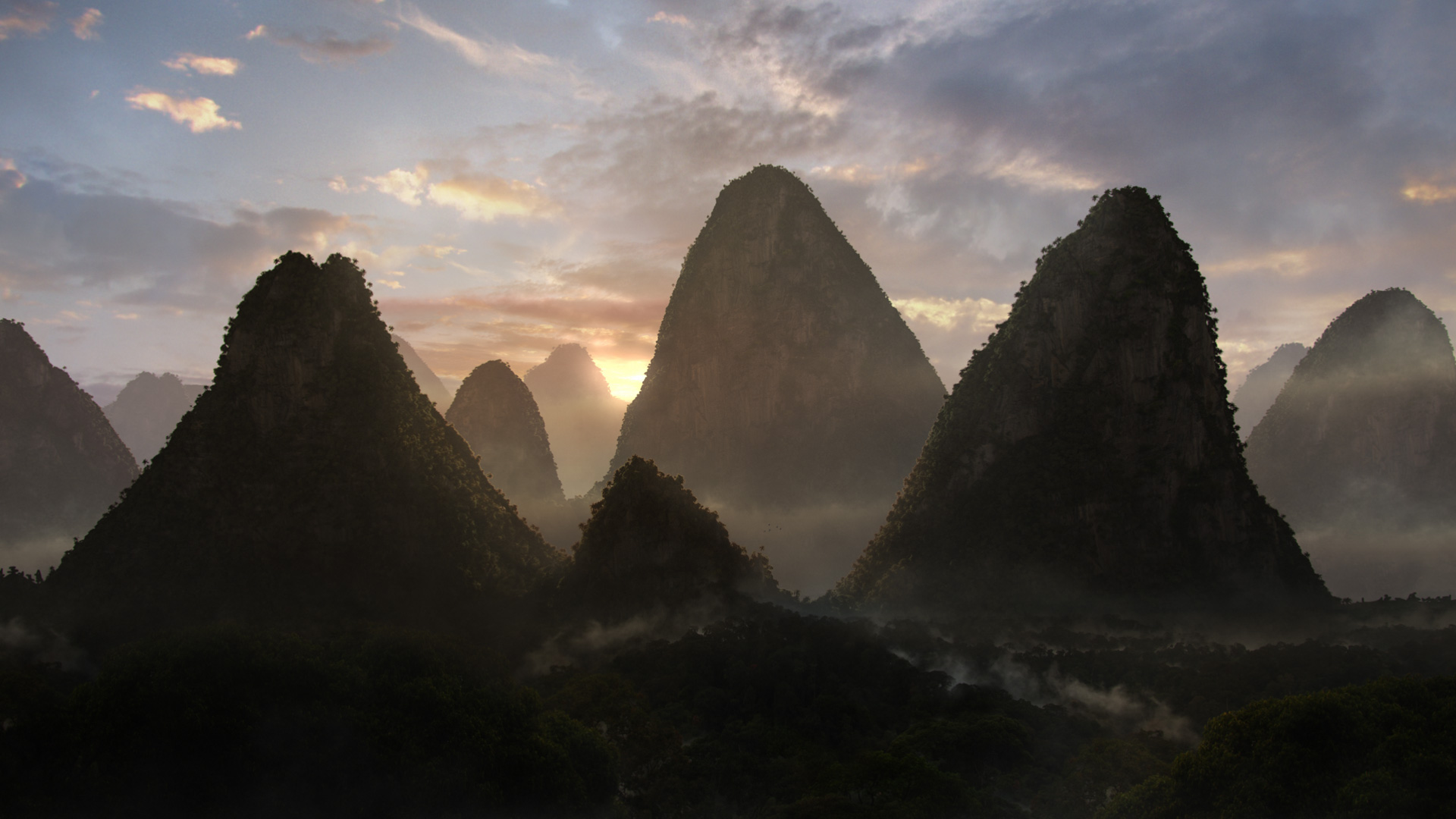
A focused study exploring composition, lighting, and atmospheric depth in digital environment work. This entry breaks down techniques for building believable natural landscapes from photographic and painted elements.
A second camera projection test for the Frozen Cliff environment, refining parallax depth and integrating foreground ice formations with the distant glacier wall. This iteration improves on the initial projection setup with tighter alignment and more nuanced atmospheric haze.
The first camera projection test for the Frozen Cliff project. This early pass establishes the base camera move across the cliff face, testing how layered 2.5D geometry holds up under subtle parallax.
Behind-the-scenes notes on building the coastal bay environment, from initial concept sketches through to the matte-painting composite. Focus on water reflections and the integration of distant ship elements against the rocky shoreline.
Early blockout phase for the Great Wall matte painting, establishing scale and silhouette against a mountainous backdrop. This stage explores how the wall structure reads at different focal lengths before committing to final detail.